Growth · Part of Compliance and Audit
PII access log + purpose annotation
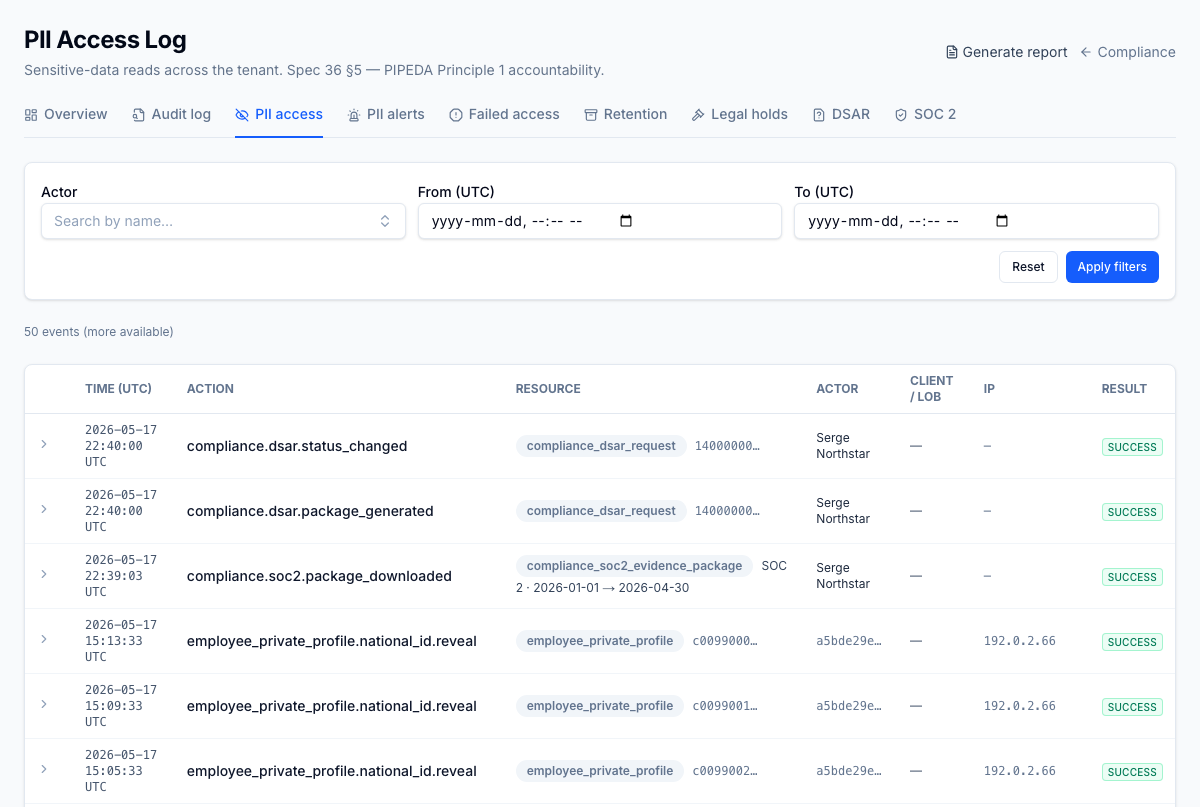
Every read of PII (national ID, home address, emergency contact, etc.) logged with the actor, target employee, and timestamp. Optional tenant toggle: require the actor to state a business purpose at read time and capture that purpose alongside the read.
For the operator
Use this when something feels off — a complaint, an investigation, a discovery request. Filter to the suspect actor + a date range and read the access pattern. If purpose annotation is on, you see WHY each access happened, not just THAT it happened. The /report subpage is your go-to for periodic per-employee PII review: pick the employee, hand them a list of who touched their record.
Business impact
Maps directly to PIPEDA / GDPR / CCPA "right to know who accessed my data" provisions. For enterprise customers in healthcare or financial services, this is non-negotiable infrastructure — purpose annotation is the toggle that turns FrontLine into a defensible record system in front of a regulator.