Starter · Part of Quality Assurance
Evaluation workflow (draft → submit → dispute → resolve)
QA (Quality Assurance: the program that scores and reviews agent interactions.) analysts evaluate calls in a structured workflow with full audit. Agents can dispute; supervisors resolve; everything is timestamped. Calibration debates turn into structured conversations, not spreadsheet fights.
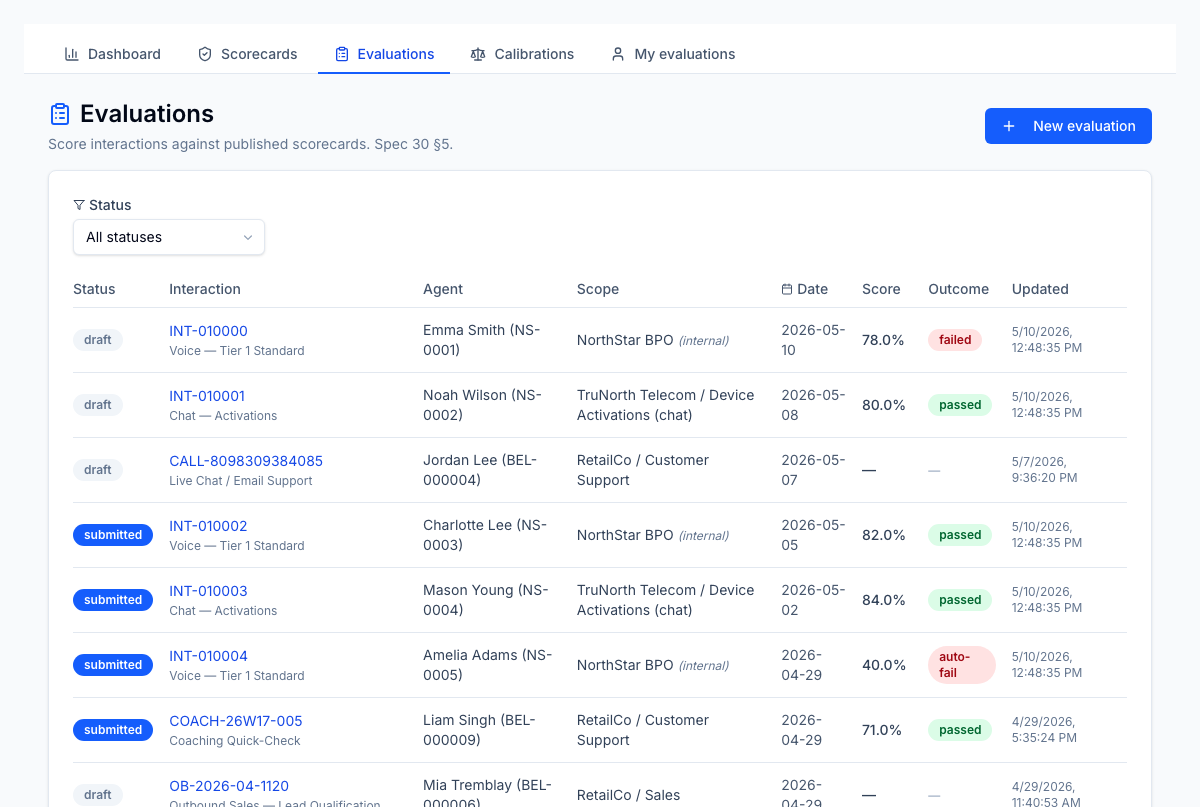
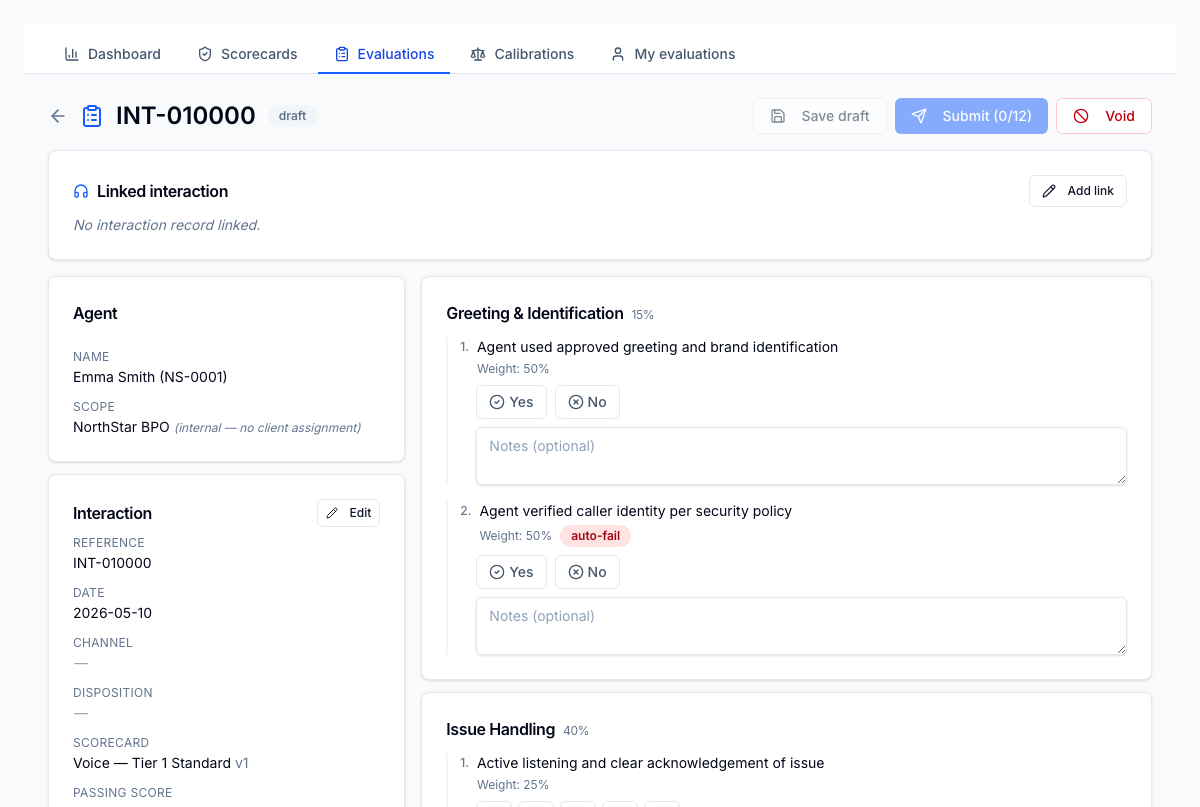
Evaluation queue — every QA evaluation across all agents with state (draft, submitted, disputed, resolved), score, and outcome at a glance.
1 / 2
For the operator
Analysts evaluate calls in a structured workflow — draft, submit, dispute, resolve — with full audit and timestamps at each transition. Agents can dispute scores and supervisors resolve in the same flow; calibration debates turn into structured conversations rather than spreadsheet arguments. The full evaluation history per agent is queryable from one screen.
Business impact
QA disputes handled outside a structured workflow consume disproportionate supervisor time and frequently end with concessions that erode QA-score reliability. A structured dispute-and-resolve flow protects QA-score integrity while giving agents a defensible appeal path, and the visible workflow itself reduces dispute frequency because everyone sees how the process works. Cleaner QA data; less supervisor friction.