Why Employee Management Technology Underdelivers in Contact Centres and BPOs
The platform is doing its job. It is making your existing operating model visible, gaps and all. In a BPO, where SLAs, billing, and compliance all run through that model, the gaps it surfaces are the ones you did not budget for. Here is where the value actually leaks, and what to fix before you blame the software.

Marsha Eisnor
Founder and Principal Consultant, CustomEdge Workforce Solutions · Published June 21, 2026
The system is live. Training happened. Your team spent weeks in implementation. The vendor handed over the keys and moved on. Yet a few months in, something still feels off.
In a BPO (Business Process Outsourcing: a firm that runs contact-centre operations on behalf of other brands.), the version of this is specific. A client escalation that should have been visible two days earlier. A governance meeting where your team reconciled the performance report by hand the night before. A penalty conversation you walked into without clean numbers to support your position. A shift that went understaffed because the scheduling data did not reflect what was actually on the floor.
The tool is working. The results are not.
This is one of the most common conversations I have with BPO and contact centre leaders. It almost never has anything to do with the software, although sometimes the software needs to be tweaked as well, if designed based on what the business thought was happening versus the actual way work is being done.
The assumption that gets implementation wrong
When a new employee management platform goes live, most organizations treat the rollout as the solution. The demo looked clean. The promise was efficiency, visibility, better decisions, connected tools. So when the results do not materialize, the instinct is to assume the system needs more configuration, more time, more adoption effort.
That instinct is understandable, even logical. However, it's been my experience it's also where a lot of time can be spent focusing in the wrong direction.
The issue is almost always upstream of the technology.
BPOs and contact centres that struggle to get value from their platforms, often struggle because the gaps that existed before implementation - in process, data, roles, accountability and operating rhythm - did not disappear when the system went live. They came with it. No one took the time to fully assess the work first.
What the platform actually does
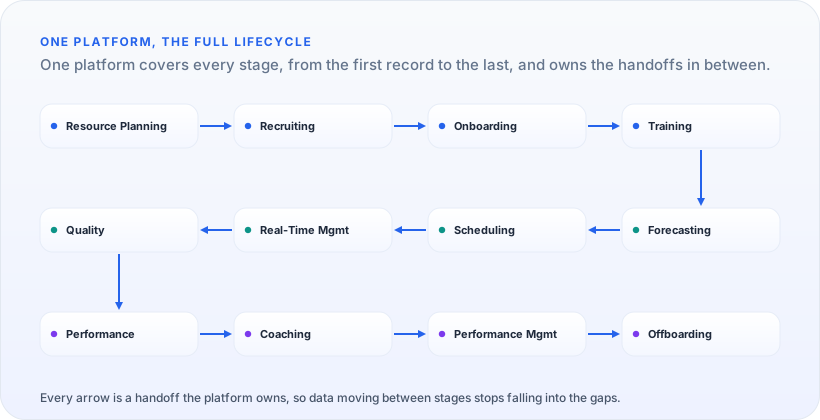
Here is the reframe that changes how you approach implementation.
In a BPO, every operational decision runs through two lenses: client commitments and margin. SLA (Service Level Agreement: a contractual performance target, e.g. answering X% of calls within Y seconds.) performance, penalty exposure, billing accuracy, compliance obligations, and cost per contact all connect back to how well the operation is running on any given day. When leaders invest in an employee management platform, the expectation is that it improves visibility across those areas. It does. But it may not be in the way most organizations plan for.
An employee management platform that covers the full lifecycle - from the first record created at onboarding through training, scheduling, performance, coaching, and exit - is not creating a new operating model. It is making your existing one visible.
Every piece of process ambiguity that lived in someone's head is now in the system. Every inconsistent data entry practice is now showing up in your reporting. Every unclear ownership question between HR, finance, operations, and workforce management is now a workflow gap with a timestamp on it.
In a BPO environment, the stakes of that visibility are particularly high. Client SLAs, penalty exposure, security protocols, compliance obligations, and billing accuracy all run through the same operating model. When the foundation is unclear, the platform does not protect you from those risks - it makes them easier to see and harder to ignore.
For organizations with a solid foundation in place, that visibility is exactly what they paid for. For those who haven't done the due diligence, it surfaces work they did not budget for.
The good news is that this is fixable. You just have to know where to look.
The tool exposes your operation. It does not fix it.
Where the gaps actually live
In my experience working with BPOs and people-powered service organizations, underperformance from these platforms almost always traces back to one or more of four places.
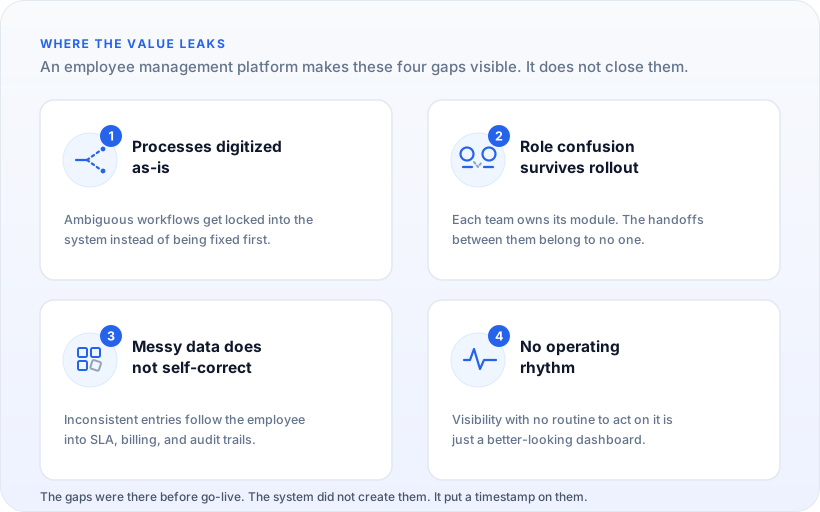
Unclear processes get digitized as-is. Onboarding steps that lived in someone's inbox. Training flows that varied by team or manager. Coaching cadences that depended on who you reported to. When those processes move into a system without being defined and standardized first, you have not improved them, you have just made them harder to change and easier to blame on the technology.
Before any module goes live, the process it supports needs to be clear, consistent, and agreed upon. If it is not, the system will reflect exactly what you put into it. Garbage in garbage out.
Role confusion survives the rollout. In most organizations, but especially in a BPO, the employee lifecycle starts before day one, with recruiting as the first point of contact. HR owns onboarding. Workforce management owns resource planning, forecasting, scheduling, and real-time management. Quality owns evaluations and calibrations. Operations owns coaching and performance. IT and security manage system access, equipment and compliance protocols. Finance tracks labour cost, billing alignment, and penalty exposure. Payroll manage pay and benefits. Leadership owns exit decisions.
When a platform connects all of those functions, someone has to own the thread. What often happens instead is that each team manages their module, and the handoffs between them - the places where data moves from one stage to the next - fall into a gap that nobody is responsible for.
Ownership has to be defined before go-live, not just within each module but across the lifecycle. Otherwise the system does what the operation does: works in silos.
Messy data does not self-correct. Data entered inconsistently during onboarding or anywhere throughout the process follows the employee forward. Incomplete training records affect scheduling logic. Inaccurate skill tags affect routing, performance reporting, coverage and billing. Quality scores entered manually under time pressure affect coaching conversations months later.
In a BPO, the implications run further than most platforms are designed to warn you about. Inaccurate data affects SLA, which affects what you can defend in a client governance meeting. It affects compliance audit trails, which affects your risk exposure. It affects billing accuracy, which affects what you can invoice and what penalties you have the evidence to dispute. It affects security access records, which is a risk category of its own.
Moving from spreadsheets to a platform does not clean the data. It moves the mess somewhere more visible and more expensive to work around.
Data discipline has to be established pre-implementation, with clear standards, validation checkpoints, and someone accountable for keeping it clean. Without that, reporting becomes noise that leaders stop trusting and start working around - which is exactly the problem the platform was supposed to solve! When that noise shows up in a client report, it is not an internal issue anymore, reputation and trust are on the line.
No operating rhythm to act on what the system now makes visible. This one is the most common and often overlooked.
A well-implemented platform creates significant visibility - across onboarding completion, time to proficiency, scheduling compliance, quality trends, coaching frequency, and turnover signals. That visibility has real value; it's one of the reasons for the investment after all.
Visibility without a rhythm for acting on it though is just a better-looking dashboard.
BPOs that get strong returns from these platforms build operating routines around what the data is telling them. Weekly reviews that connect scheduling performance to quality outcomes. Coaching conversations that use the system rather than operating beside it. Exit data that feeds back into hiring criteria. SLA performance tracked against workforce decisions, not just reported after the fact. Leadership decisions grounded in what the platform is surfacing, not in what someone remembers or manually tracked from last quarter.
The place this becomes most visible externally is the client governance meeting. If the operating rhythm is working, your team walks in with data they trust, trends they can explain, and decisions they can defend. If it is not, you walk in with a report someone reconciled the night before and answers that rely on memory and pieced together data rather than the system. Clients notice the difference, even when they do not say it directly.
The technology creates the opportunity. The operating rhythm is what turns it into results.
What to fix first
If you are mid-implementation or post-go-live and not seeing the returns you expected, the place to start is not more training on the system. First:
1. Confirm the workflow. Start by clarifying the process before you digitize another module. If the process is not defined, the system cannot make it better. Invest the time to do that part right.
2. Establish ownership and functional handoffs. Define ownership across the lifecycle, not just within each team's corner of it. The handoffs between functions - and between client commitments, compliance requirements, and internal operations - are typically where value leaks most consistently. Assign accountability and ensure the handoff process is documented and understood.
3. Build the operating cadence. Then build the operating cadence that connects what the system is making visible to the decisions that need to be made. That rhythm is what separates organizations that have the platform from those that are actually getting value from it. Create the framework, workflow, flags and channels to act on the data before you.
The takeaway
The best technology investments are the ones where leaders treat the rollout as the beginning of the operating model work, not the end of it.
The platform gives you the infrastructure. What you do with it depends entirely on the clarity, discipline, and operational strategy you build around it from the start.
If the results you are expecting are not showing up yet, the system is probably doing exactly what it was designed to do. Start with the operating model around it. That is almost always where the real gaps are sitting.
Once those are addressed, you may still need technical changes to the platform itself. That is a separate conversation, and a much smaller one.
Get the operating model and the platform working in rhythm together, and the value you were expecting will show up.
Marsha Eisnor
Founder and Principal Consultant, CustomEdge Workforce Solutions
Founder of CustomEdge Workforce Solutions based in Nova Scotia, with more than twenty-five years leading workforce management, operations, and shared services across global BPO, contact centre, and service organizations. She helps leaders align people, process, and tools so the operating model and the technology investment work as one. The result is a more predictable, scalable operation that holds up under pressure - and more often than not, exceeds what the business expected. Learn more at customedgeworkforcesolutions.com.