Starter · Part of Workforce Management
Multi-Site and WFH
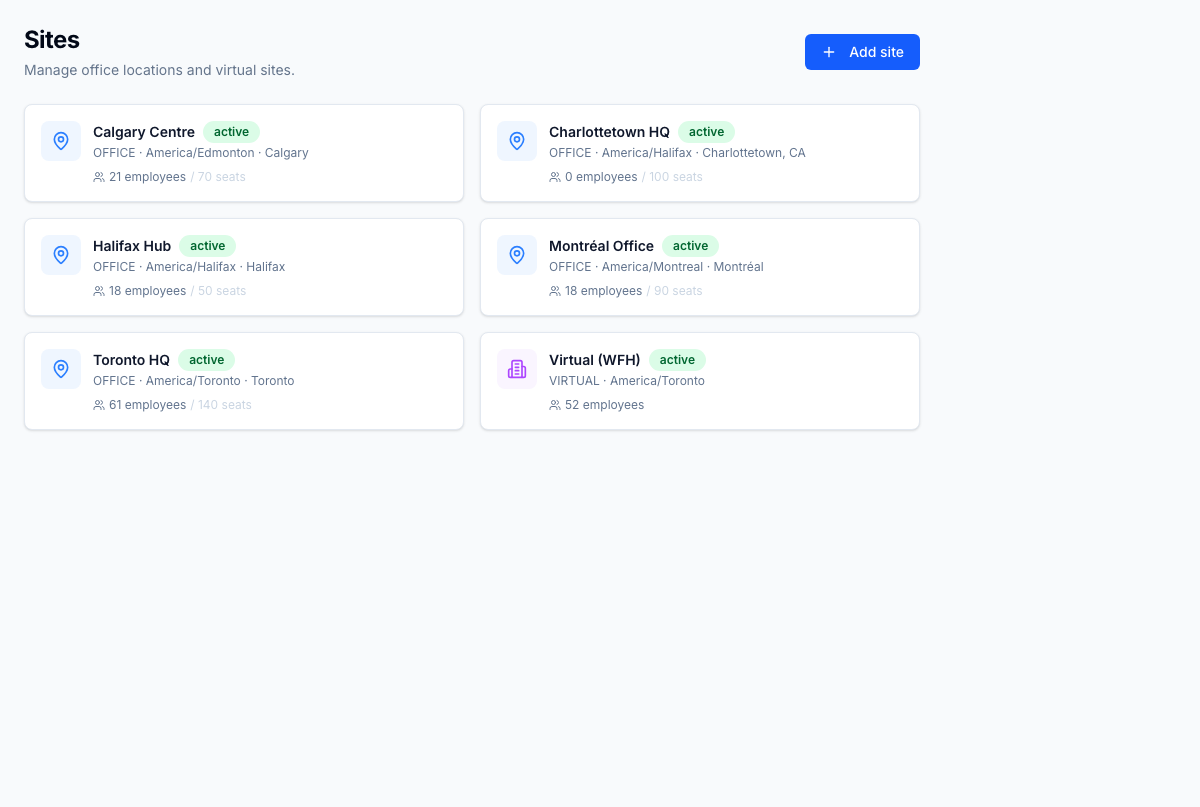
Manage agents across sites and home arrangements, with cross-site borrowing (dual-manager approval) and WFH policy embedded in the site record. No spreadsheet tracking who's onsite/remote/hybrid.
For the operator
Each agent record carries a site assignment and a work arrangement flag — onsite, WFH, or hybrid with a specific cadence — and the schedule and routing layers respect both without you maintaining a separate spreadsheet. Cross-site borrowing is a first-class workflow: a supervisor at site A requests, the supervisor at site B approves, and the agent's compliance and certifications validate against site B's LOB (Line of Business: a distinct client program or queue within an operation.) profile automatically. The WFH policy travels with the site, not with the agent record, so you change the rule once and it propagates.
Business impact
Multi-site contact centres lose visible margin to two patterns: idle capacity at site A while site B turns down work, and unexpected attrition spikes when WFH policy enforcement is inconsistent across managers. A unified site/work-arrangement model fixes both — borrowing becomes liquid, and policy enforcement becomes auditable. It also makes you bid-ready on RFPs that demand a documented WFH security posture without standing up a dedicated remote-work program.