Starter · Part of Workforce Management
Business Continuity and Emergency Rescheduling
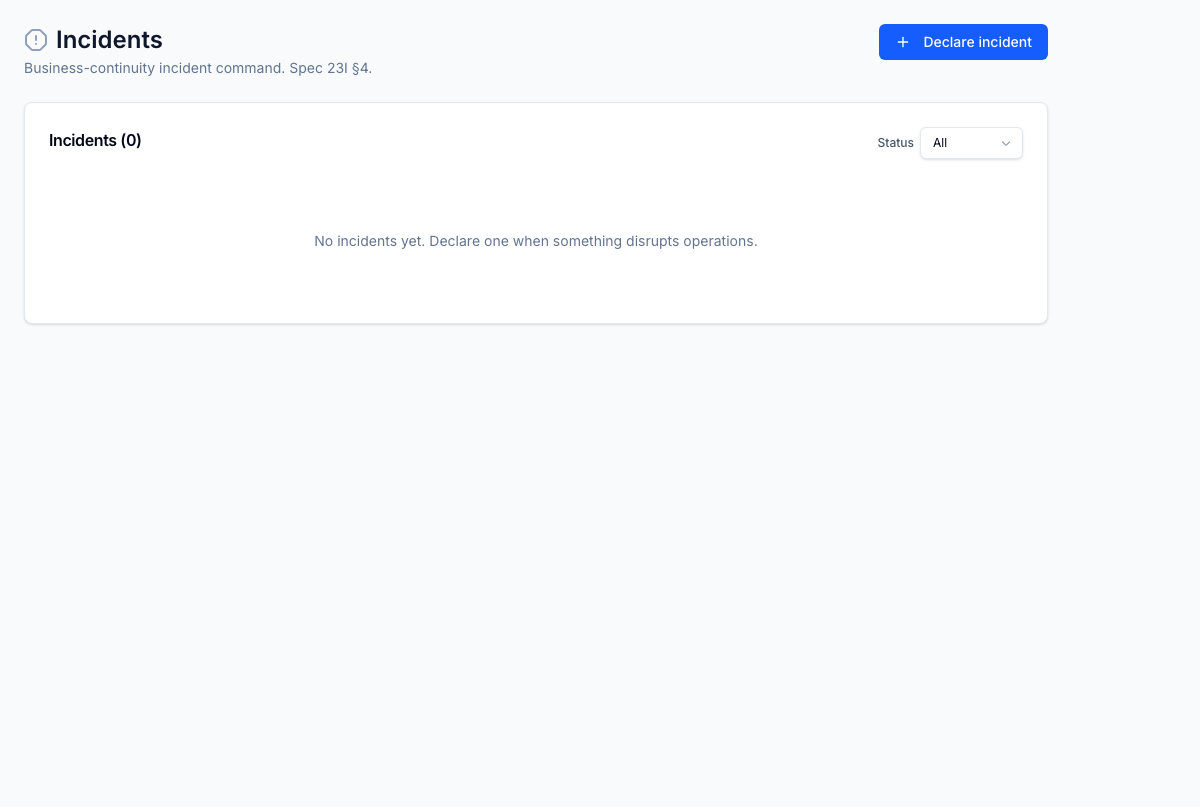
Declare an incident (storm, outage, surge), pick affected LOB (Line of Business: a distinct client program or queue within an operation.)s, the system reassigns to WFH-eligible agents and surfaces unresolvable cases for manual review. Storm-day scrambles stop being a panic in WhatsApp.
For the operator
An incident declaration takes thirty seconds: name the event, select affected site or LOB, and the system pulls the active roster, identifies WFH-eligible agents, and proposes reassignments inside compliance and skill rules. The unresolvable cases — agents who can't shift to WFH, coverage gaps the bench can't fill — surface as a worklist for human triage rather than buried in a Slack thread. Routing, T&A (Time and Attendance: clock-in/out and worked-hours tracking.), and adherence all respect the new state from the moment the incident is committed.
Business impact
Storm days, ISP outages, and surge events historically cost a mid-size contact centre 1-3% of annual revenue in SLA (Service Level Agreement: a contractual performance target, e.g. answering X% of calls within Y seconds.) credits and client-trust damage that takes quarters to repair. Compressing the response from frantic-manual-coordination to one-click reassignment removes most of that loss directly and replaces the post-incident client postmortem with a clean audit log. It also turns an operational weakness into a sales asset — "documented BCP drill cadence with sub-15-minute reassignment" beats the competitor's PowerPoint promise.